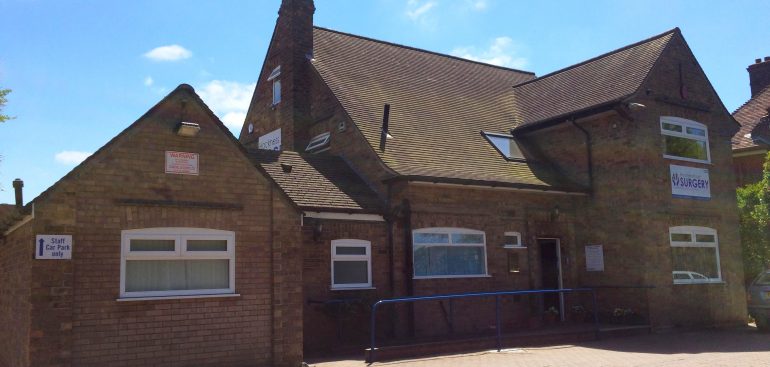
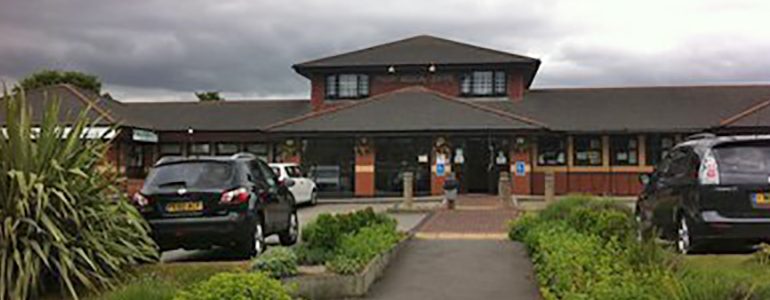
Priory Medical Centre, Liverpool

Priory Medical Centre

After receiving their initial valuation from NHS England, the Priory Medical Centre in Liverpool instructed GP Surveyors to check their latest Notional Rent reimbursement, and they were pleased they did!

Dr. Steve Connolly, GP Partner, The Priory Medical Centre

“Having used GP Surveyors previously we had no hesitation in requesting their help again for this review. Their specialist knowledge and attention to detail give us great confidence in their service.

The case was allocated to Chris Kozlowski, one of our highly experienced Senior Surveyors. Chris undertook a full inspection of the premise, establishing accurate measurements and areas. Chris then began his review, comparing the breakdown of the surgeries figures with like for like surgeries in the area and concluded that there was sufficient evidence to move forward with a challenge to the District Valuers (DVs) initial opinion of the surgeries Notional Rent.

The case was based upon the following factors;
• Inaccurate floor areas
• Low unit rate

Chris then began negotiations with the DV and drawing upon our vast database of local comparable evidence, Chris was able to successfully negotiate an increase of 24% above the DV’s initial Notional Rent valuation.

Chris explains; “With regards to the increase in unit rate, we had strong comparable evidence on similar purpose-built surgeries in the area. The DV had also excluded certain areas that were eligible for inclusion. After discussions, the DV agreed to adopt my areas and rates.”

The Notional Rent increase we secured the practice benefited the surgery by thousands of pounds in extra income, a result they were very pleased with. In addition, the uplift in their Notional Rent is likely to have increased the capital value of the surgery, significantly benefiting the property-owning partners.

We hope you have found our Priory Medical Centre case study useful, to see our full range of Notional Rent case studies click here.

[printfriendly]

St Road Medical Practice, Prestwick

Station Road Medical Practice

Having gained Station Road Medical Practice an increase on their previous Notional Rent, Julie Grant, the surgery Practice Manager, got in touch with her Account Manager, Sue Cockayne, to instruct us to check her latest Notional Rent figure.

Paul Conlan, GP Surveyors Operations Director, and highly experienced Surveyor took on the case. Paul carried out a review and concluded that there was sufficient evidence to move forward with a challenge to the District Valuers (DVs) initial opinion of the surgeries Notional Rent.

Paul compiled his report to substantiate the case for an increase in the surgery’s Notional Rent and sent this to the NHS in order for them to instruct the DV, GP Surveyors then supplied the DV with all of the case evidence. Following a delay to Station Road’s case and several other client’s cases, in the Ayrshire area, the NHS urged Scottish DV’s to progress cases in the area as a matter of urgency.

Negotiations then began with the DV concerning the eligible areas of Station Road Medical Practice. In order to further our case, Paul visited the surgery again to carry out a further inspection and gather more evidence. After subsequent negotiations, the facts of the case were agreed with the DV.

However, given there were still outstanding cases in the Ayrshire area and each surgery’s rental valuation would affect the other, it was considered the best course of action to reach final figures on all cases at the same time. This way all parties could rest assured their surgeries would receive an accurate current market rent.

Finally, all our surgeries cases in the area were discussed together with the DV and were finally agreed upon.

We’re pleased to report that Paul was able to successfully negotiate an increase of 23% above the DVs initial Notional Rent valuation of Station Road Medical Practice, a result Julie and the practice were very pleased with.

The Notional Rent increase Paul secured benefited the surgery by a large uplift in their Notional Rent and is likely to have increased the capital value of the surgery.

Julie Grant, Practice Manager, Station Road Medical Practice, Prestwick, Scotland:

“GP Surveyors are an excellent, professional company, who achieve good results and do all the hard work for you. We have had a first-class experience with them twice now, which has resulted in successful increases in our notional rent. Their communication is excellent, keeping you updated with progress. Would highly recommend their service, give them a go.”

We hope you have found our Station Road Medical Practice case study useful, to see our full range of Notional Rent case studies click here.


[printfriendly][/vc_column_text][/vc_column][/vc_row]

Scottish GPs could face major property pain

Scottish GPs property

A key concern of GPs is the cost of maintaining surgery property, for Scottish GPs, a raft of new measures is beginning to address this. Such costs put pressure on finances and the uncertainty can be a huge disincentive to partnership recruitment, particularly in rural or deprived areas.

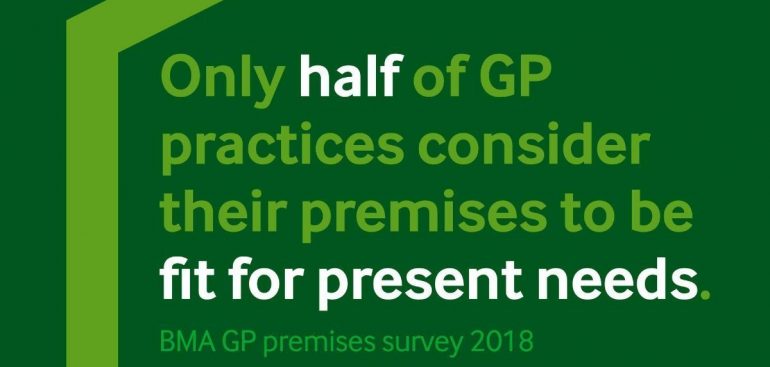
The BMA GP Premises Survey results are in

BMA GP Premises Survey

The BMA GP Committee is currently participating in the GP premises review, led by NHS England and the Department of Health and Social Care. To inform this process, the BMA GP Premises Survey was targeted to build a fuller picture of the current landscape for GP premises. GP practices were asked to complete a survey about the state of their current premises.

NHS England’s GP parking reimbursement policy overturned

GP parking reimbursement

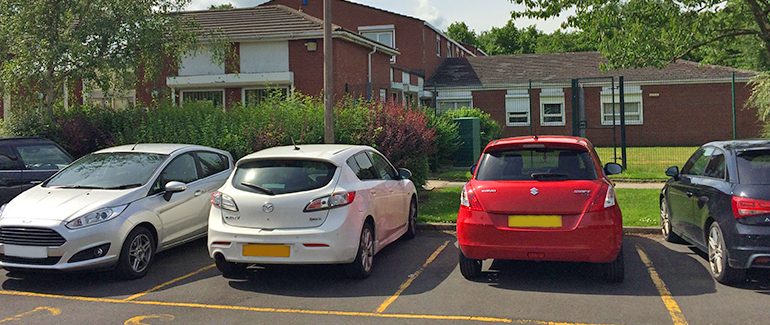
GP Surveyors have recently won a breakthrough case on behalf of a Norfolk based GP surgery which has resulted in NHS England’s GP parking reimbursement policy being overturned.

In some areas, NHS England has been executing a policy whereby only 3 parking spaces per clinical room are included in GP surgeries rental reimbursement.

Whilst undertaking a Notional Rent review on behalf of Fleggburgh Surgery, GP Surveyors found the parking policy had been applied to the surgeries rental reimbursement. The surgery subsequently instructed GP Surveyors to challenge their assessment.

During discussions with District Valuer Services, it became apparent that they were following instructions to implement this policy from NHS England and did not have the authority to agree to a change, despite having adopted a higher number of spaces when acting for the Primary Care Trust at previous reviews. Feeling there was sufficient justification to lift the parking limits all together, Paul Conlan (GP Surveyors, Operations Director) made a dispute application to NHS Resolution.

Following NHS resolution providing NHS England with the application papers submitted by GP Surveyors, NHS England conceded the case.

After the conclusion of the surgeries Notional Rent review, Dr. Rogers, (Fleggburgh Surgery) said: “As always an excellent and professional service, producing an excellent result”.

GP Surveyors would be interested to hear from any practices that may have been affected by this parking policy. If your surgery has had the number of parking spaces reduced in your rent reimbursement, then please contact GP Surveyors.

Primary Care Networks and what this means for GP premises

Primary Care Networks Premises

GPs leaders have said, NHS England’s premises review will be key to the success of Primary Care Networks (PCNs), and with the review due to conclude shortly, it’s time to examine the challenges facing GP premises and look towards the future of property in PCNs.  

Firstly, here’s a recap of what we know about PCNs so far, from structure to funding and staffing to new services, here’s our comprehensive overview.

What is a Primary Care Network?

A PCN amalgamates a group of neighbouring GP practices to cover a population of 30,000 to 50,000 patients. NHS England’s aim is that PCNs will provide support to member surgeries, the surgeries will collaborate to deliver patient services and pressure can be taken off GPs, as they’ll benefit from an expanded primary care team and shared network staff.

NHS England’s vision of PCNs is that they should be small enough to provide the personal care valued by both patients and GPs, but large enough to have impact and economies of scale through better collaboration between practices and others in the local health and social care system.

Funding Primary Care Networks

A funding package, under the new five-year GP contract deal, will support the creation and staffing of PCNs, the full details of which will be published at the end of March 2019.

Figures released to date state that, a typical practice is set to receive over £14,000 each year for their initial and continued active participation in a primary care network. With PCNs receiving £1.50 per patient to cover administration costs, alongside payments for a clinical lead, staff and extended access.

Primary Care Network staff and additional services

The new five-year GP contract states that NHS England will fund 22,000 additional practice staff by 2023/24, the extra staff will include social prescribing workers, pharmacists, physiotherapists, paramedics, and physician associates. Early estimates show that an average PCN will take on 21 new staff each by 2023/24. With the aim of delivering additional services in communities, such as; physiotherapy, ultrasound and mental health support.

Primary Care Network uptake

Practices have until July 2019 to join a PCN but are not obliged to. However, practices that chose not to join a network would put themselves at a significant financial disadvantage. Leaving themselves without access to, over 50%, of the new funding available through the five-year GP contract deal.

Speaking at the Londonwide LMCs conference 2019, Dr. Krishna Kasaraneni (General Practitioners Committee, Executive Team Member) said: ‘First of all, not all practices need to get into a network. Let’s be absolutely clear. You can’t be forced into joining a PCN. So, if you as a practice choose not to that’s fine. But overall the general direction of travel is that it is a Direct Enhanced Services (DES), it is optional, but there’s going to be a lot of funding coming through to support it’.

With such incentives available one would suspect that the vast majority of practices will join a PCN by the deadline. In fact, the GP contract stated as of October 2018 that 88% of practices in England had already chosen to join or lead a PCN, according to CCG data.

The future of GP Federations

With many GP Federations covering practice lists of more than 50,000 patients, it is not a simple case of federations becoming PCNs. Dr. Richard Vautrey (BMA, GP Committee Chair) told Pulse in February 2019, that in most regions of the country, federations would be too large to count as a primary care network.

At-time of publishing, NHS England has not made a formal statement regarding the future funding of GP Federations, but we suspect that existing funding and contracts held by GP Federations will be run down and subsequently taken over by PCNs.

Primary care networks & premises challenges

A major challenge facing GP practices and the implementation of PCNs is surgery capacity. There is widespread concern among GPs that practices will simply not have room to accommodate the 20,000 new staff brought in through PCNs.

During the Londonwide LMC Conference, Dr. Kasaraneni said he too was experiencing this very problem, ‘I know the exact problems that you have. In my practice, the only place I’ve got left now is a car park and a loo to put any extra staff in, we hot desk because we haven’t got any capacity.’

As part of the GP contract negotiations for 2018/19 NHS England and the GPC agreed to carry out a review of the GP premises policy to ensure that it was fit for purpose, both now and in the future. This review will also incorporate the premises cost directions, which stipulates how premises costs incurred by practices are reimbursed and crucially how funding for premises improvements are delivered.

The issue for practices is that the implementation of PCNs is moving faster than premises policy and surgeries need for clarification on what support will be available to increase practice capacity. The conclusion and publication of the GP premises policy review and premises cost directions should go some way towards resolving this issue. However, NHS England has recently stated that the review was ‘due to conclude shortly’, but there is no timeframe for when it will be published.

The future of premises in primary care networks

Paul Conlan (GP Surveyors, Operations Director) foresees the following scenario for the future of premises in Primary Care Networks – more GP mergers, and here’s why.

With a very high percentage, if not all surgeries in PCNs by the July 2019 deadline most surgeries will soon be working in a collaborative manner if they aren’t already, when you fast forward, working collaboratively with neighbouring surgeries will become a normal working structure and environment.

Under the PCN structure, larger practices within a network will have a greater capacity, compared to smaller ones and will, therefore, absorb more new staff and services. In turn, one would expect patient demand to register for the larger practices to increase, with a detrimental impact on smaller practices. Creating the following issues; a greater proportion of funding flowing to larger practices, increasing their income while stagnating smaller practices incomes.

However, larger practices patient lists can’t increase ad infinitum and larger surgeries will still rely upon the specialisms of GPs from smaller practices, in order to deliver all the services PCNs require. Therefore, a mutual need is created, with smaller practices needing the capacity of larger ones and larger practices needing the skills of smaller ones, in order that PCNs function as a whole.

Another push factor towards mergers is practices need to mitigate their exposure to risk. Major risks include the GP recruitment crisis and succession issues. With the 2015 target of recruiting 5,000 new GPs still not met and the deadline for this removed, I think we can all agree that the GP recruitment issue is not going to be solved overnight. Equally the factors causing succession issues show no signs of easing. Merging surgeries reduces the risks posed by these issues, as a merger creates a larger pool of staff resource for all parties to draw upon.

To summarise Conlan is of the opinion that; PCNs will create practices mutual need to share capacity and GP specialisms, while establishing a culture of cooperative working, formalising this mutual beneficial situation by merging can then deliver further economies of scale, reduce exposure to risk and help ease recruitment and succession issues. When you bear these factors in mind an increase in practices mergers seems like a natural outcome of PCNs.


GP mergers – property considerations

See our guide on GP mergers for more information on what to consider from a property perspective or if you’d like to book a free GP merger consultation please contact us.


Business photo created by rawpixel.com – www.freepik.com

‘No easy solution’ to GP premises crisis, says GPC

GP Premises Crisis Dr Krishna Kasaraneni

There is ‘no easy solution’ to the GP premises crisis facing general practice, GP leaders have warned, amid concerns that practices will be unable to accommodate new staff brought in through primary care networks.

MNDA charity coffee morning a great success

MNDA Charity Coffee Morning

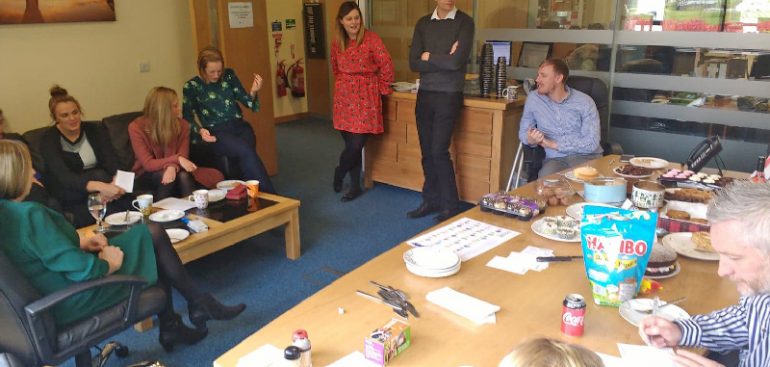
The first in our series of charity events kicked off yesterday with a fun-filled coffee morning in aid of The Motor Neurone Disease Association (MNDA), a charity that means a great deal to our Business Manager, Rebecca Adams.

The coffee morning was filled with games, a raffle and lots and lots of cake! The team really went to town showcasing their baking skills, we had homemade carrot cake, cookies, brownies, flapjack, and even fudge! Those less skilled in the baking department had a last minute rush to the supermarket, naming no names!

The MNDA’s bake it quiz was great fun and taught us lots of fun baking facts, the Egyptians baked the first know cakes and the first mention of a ‘cupcake’ was recorded in the 18th Century – who knew!

Our raffle went down a storm thanks to our star prize – two Sheffield United tickets – kindly donated by the club, to support our MNDA coffee morning.

Our bake sale, quiz, and raffle made for a great event and we’re pleased to say the totaliser for the coffee morning hit £157.91.

A big thank you to all the GP Surveyors team and our neighbors Europa Worldwide Group, for your contributions to our MNDA Charity Coffee morning and a special thanks goes out to our very own Kaya Brayshaw for organising the whole event.[/vc_column_text]

Useful links

Motor Neurone Disease (MND) is a progressive and ultimately fatal disease that results in degeneration of the motor neurones, or nerves, in the brain and spinal cord, to find out more about MND and how you or your organisation can get involved, visit www.mndassociation.org.

The MDMA have also put together a useful guide for GPs and primary care teams.

[/vc_column][/vc_row]

Leadgate Surgery, County Durham

Leadgate-Surgery

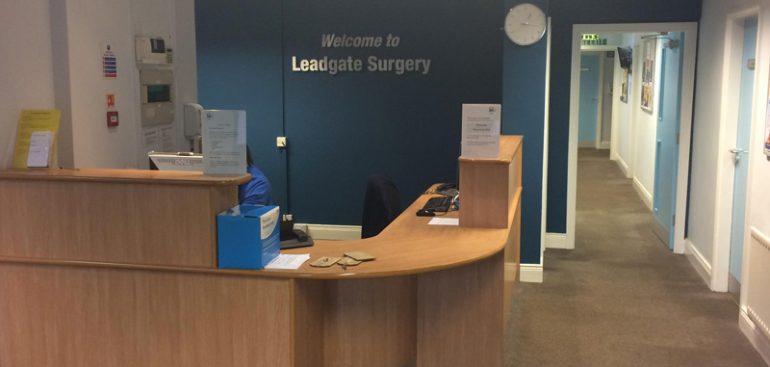
GP Surveyors first worked for the Leadgate Surgery this year and we’re pleased to say their Notional Rent Review had a fantastic outcome.

One of our highly experienced Surveyors, Tom Simpson took on the case and visited the surgery to carry out a full inspection of the premises. Having completed his inspection, compiled his finding and compared the District Valuers (DV) Notional Rent valuation with our vast database of evidence, Tom concluded, there was enough evidence for the surgery to challenge the DVs’ valuation.

An interesting finding of Tom’s inspection was that a large area of storage space within the surgery had not been included in the DVs figures. When comparing storage areas of similar quality and functionality, that have been assessed as eligible for Notional Rent reimbursement, Tom concluded there was a strong case for these areas to be included.

Tom’s case for an increase was based upon a number of factors, including;
  • A low unit rate
    The surgery is a 1995 purpose-built medical centre and Tom believed this should be placed in line with other purpose-built surgeries in the area.
  • A low value placed on car parking spaces
    The car parking rate had been set low compared to the evidence in the surrounding area.
  • Storage areas
    Storage areas missing from DVs figures.

Tom then presented the above case, alongside his comparable evidence to the District Valuer and began negotiations to increase the surgeries Notional Rent reimbursements.

Much to the delight of the surgery, Tom was able to successfully negotiate an increase of 7.62% above the initial Notional Rent valuation. In addition, this increase in the surgeries Notional Rent is likely to have increased the investment value of the property.

Here’s what Michael Foster, Practice Manager, had to say about our Notional Rent service;

“Excellent and efficient service. Successful outcome to notional rent review. Highly recommended GP Surveyors.”

We hope you have found our Leadgate Surgery case study useful, to see our full range of Notional Rent case studies click here.

[printfriendly]

Hackness Road Surgery, Scarborough

Hackness Road Surgery Scarborough

Geraldine, the Practice Manager of Hackness Road Surgery in Scarborough, was keen to obtain a second opinion on the District Valuers (DVs) initial Notional Rent valuation and so sought GP Surveyors specialist advice.

Having spoken to Paul Hardman, one of our highly experienced Client Managers Geraldine instructed GP Surveyors to check the surgeries Notional Rent figure. We duly dispatched one of our Senior Surveyors & RICS Registered Valuers, Claire Kersey, to visit the practice. Clare met with Geraldine at the surgery and carried out a full inspection of the premises. Having collated all the evidence and compared this to like for like surgeries in the area, Clare concluded that there was a case to challenge the DV’s initial Notional Rent valuation.

The case for an increase was based upon a number of factors:

  • Inaccurate floor areas
    Upon inspection, Clare found the surgeries’ ground floor and first-floor areas were larger than stipulated in the DV’s valuation.
  • Property type – low unit rate
    The surgery is a converted premises, which has been extended, therefore Clare believed the surgery should be placed in line with similar premises on a higher unit rate.
  • Low car park rate
    A low value had been placed on car parking spaces when compared to surgeries in the surrounding area.

Clare then began negotiations with the DV to bring the surgeries Notional Rent value in line with comparable surgeries in the locality. Drawing upon our vast database of local comparable evidence, Clare was able to successfully negotiate a 13.9% increase in Notional Rent, above the DV’s initial valuation of the surgery. A result Geraldine was very pleased with.

The great news for the property-owning partners was that the notional rent increase is likely to have increased the capital value of their property.

Geraldine, Practice Manager;

“The process was made very east, the team are all extremely helpful. Great service, friendly and helpful staff, achieved a successful challenge gaining an additional increase. Would definitely recommend.”

We hope you have found our Hackness Road Surgery case study useful, to see our full range of Notional Rent case studies click here.

If you’d like GP Surveyors to carry out an assessment of your Notional Rent, or you have any questions, please contact us on 0114 281 5850 or email [email protected]

[printfriendly]